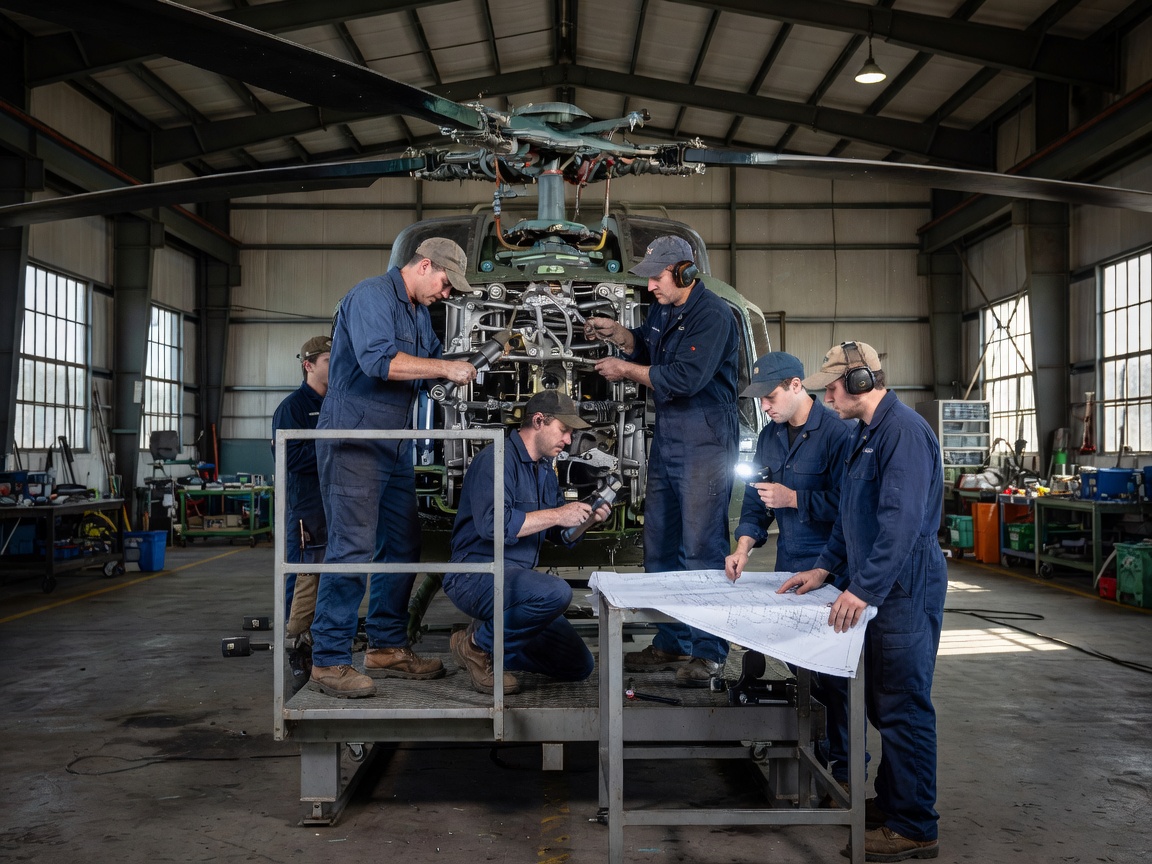
Helicopters are subjected to intense mechanical stress. Because a helicopter beats the air into submission rather than gliding through it like a fixed-wing aircraft, its moving parts experience extraordinary levels of vibration, torque, and centrifugal force. Maintaining these machines requires specialized knowledge and uncompromising adherence to safety schedules.
Daily and Pre-Flight Inspections
The first line of defense against mechanical failure is the pre-flight inspection. Before the engines are even primed, pilots and line mechanics walk around the aircraft to verify its airworthiness. This involves checking for hydraulic leaks, examining the condition of the rotor blades for delamination or strike damage, and ensuring all cowlings are securely fastened.
- Fluid Levels: Transmission fluid, engine oil, and hydraulic reservoirs must be at precise levels. A sudden drop indicates a leak that must be addressed before takeoff.
- Chip Detectors: Magnetic plugs installed in the oil systems of the engine and transmission collect metallic debris. A warning light in the cockpit will alert the crew if excessive metal chips are detected, often a precursor to bearing failure.
Scheduled Maintenance and MRO
Maintenance, Repair, and Overhaul (MRO) facilities conduct deep, scheduled inspections based on flight hours and calendar limits. A helicopter might undergo a 100-hour, 300-hour, or annual inspection depending on the manufacturer's maintenance manual.
Unlike cars, where parts are replaced when they break, helicopters operate on strict life-limited part schedules. Components like rotor head grip bolts or specific engine turbine wheels must be discarded and replaced after a set number of flight hours or engine cycles, even if they appear visually flawless. This preventative paradigm prevents catastrophic fatigue failures in flight.
Vibration Analysis and Track & Balance
Because the main and tail rotors spin at high speeds, even microscopic imbalances can cause severe vibration. Excessive vibration not only degrades passenger comfort but severely shortens the life of avionic and dynamic components.
Mechanics use specialized dynamic balancing equipment to perform a "track and balance." Sensors map the path of each blade through the air and measure the exact frequency and amplitude of vibration. Mechanics then adjust the pitch links (which control the blade's track) or add minuscule lead weights to the blade root (to control balance) until the helicopter flies smoothly.
The Cost of Safety
The rigorous requirements of rotary-wing maintenance make operating a helicopter significantly more expensive per hour than flying a comparable fixed-wing aircraft. The high ratio of maintenance hours required for every hour of flight time ensures that safety is mathematically embedded into the operation of the aircraft. Any deviation from the OEM (Original Equipment Manufacturer) specifications grounds the aircraft immediately.