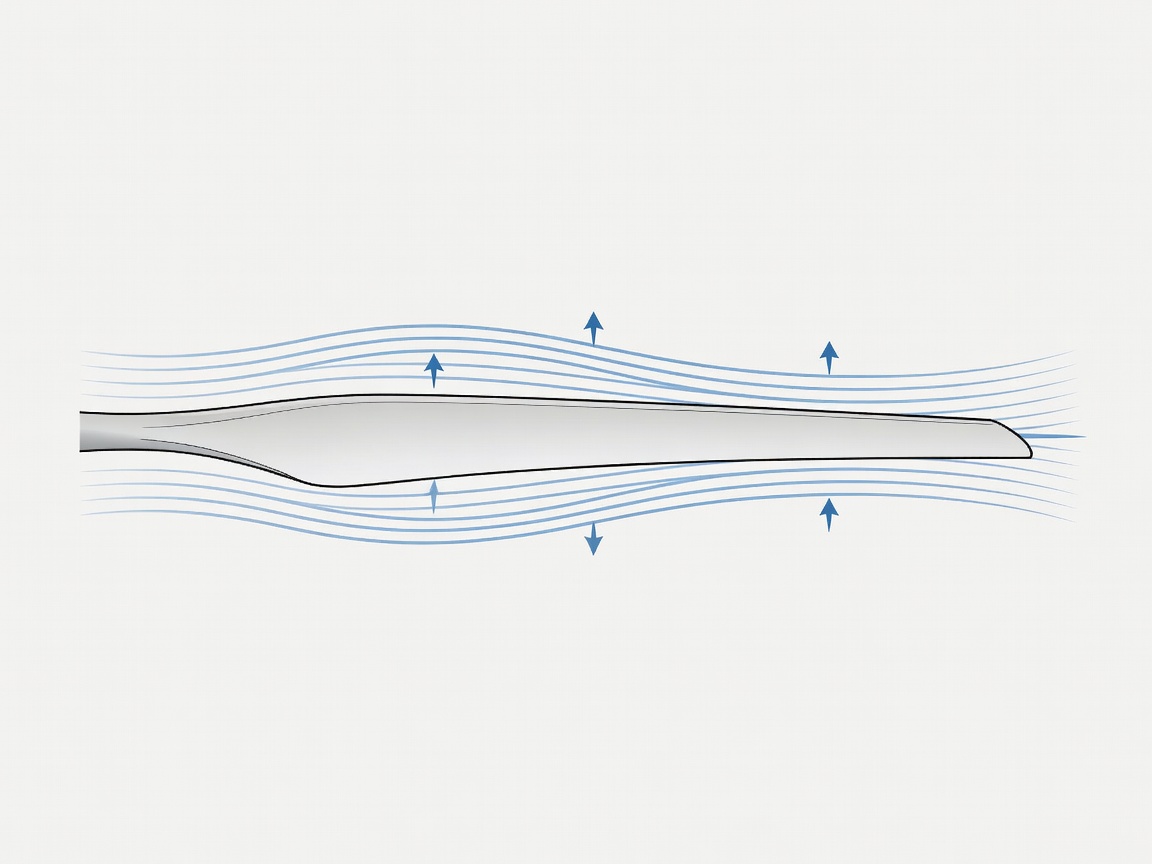
A helicopter relies on the same aerodynamic principles as an airplane—lift, weight, thrust, and drag—but applies them in a radically different way. Instead of propelling an entire wing forward through the air to generate lift, a helicopter spins narrow wings (the rotor blades) through the air while the fuselage can remain completely stationary.
Generating Lift
As the engine turns the main rotor mast, the attached blades slice through the air. The shape of the blade (an airfoil) creates lower air pressure above it and higher air pressure below it. This pressure differential generates lift. If the lift exceeds the weight of the aircraft, the helicopter ascends.
Torque and the Tail Rotor
Physics dictates that for every action, there is an equal and opposite reaction. As the engine drives the main rotor clockwise, it imparts an opposing counter-clockwise force (torque) onto the fuselage. Without intervention, the body of the helicopter would spin uncontrollably in the opposite direction of the main rotor.
To counteract this, standard helicopters utilize a tail rotor. Mounted vertically at the end of the tail boom, it acts as a small fan pushing air laterally. This thrust exactly opposes the torque of the main rotor, keeping the nose of the helicopter pointed straight ahead.
The Flight Controls
Controlling a helicopter requires coordinating four main inputs simultaneously. Unlike fixed-wing flight, which can be stable, hovering a helicopter is dynamically unstable, often compared to balancing on top of a beach ball.
- The Collective: A lever located beside the pilot's seat, operated with the left hand. Pulling it up increases the pitch angle of all main rotor blades simultaneously (collectively), generating more lift to climb.
- The Throttle: Usually a twist-grip on the collective lever. Modern turbine helicopters use electronic governors to manage engine RPM automatically, keeping rotor speed constant regardless of collective pitch.
- The Cyclic: The central stick controlled by the right hand. Pushing it forward, backward, or sideways changes the pitch of the blades individually as they cycle through rotation. This tilts the entire rotor disc, directing thrust to move the helicopter laterally.
- Anti-Torque Pedals: Operated by the pilot's feet, these change the pitch of the tail rotor blades. They allow the pilot to point the nose left or right by increasing or decreasing tail rotor thrust.
Autorotation: The Ultimate Safety Net
In the event of complete engine failure, a helicopter does not simply fall out of the sky. A freewheeling unit instantly disconnects the dead engine from the rotor system, allowing the main rotor to spin freely. As the helicopter descends, upward rushing air drives the rotor blades, maintaining rotational speed. Near the ground, the pilot pulls the collective to convert this stored kinetic rotational energy into a brief burst of lift, cushioning the touchdown. This maneuver is known as autorotation.