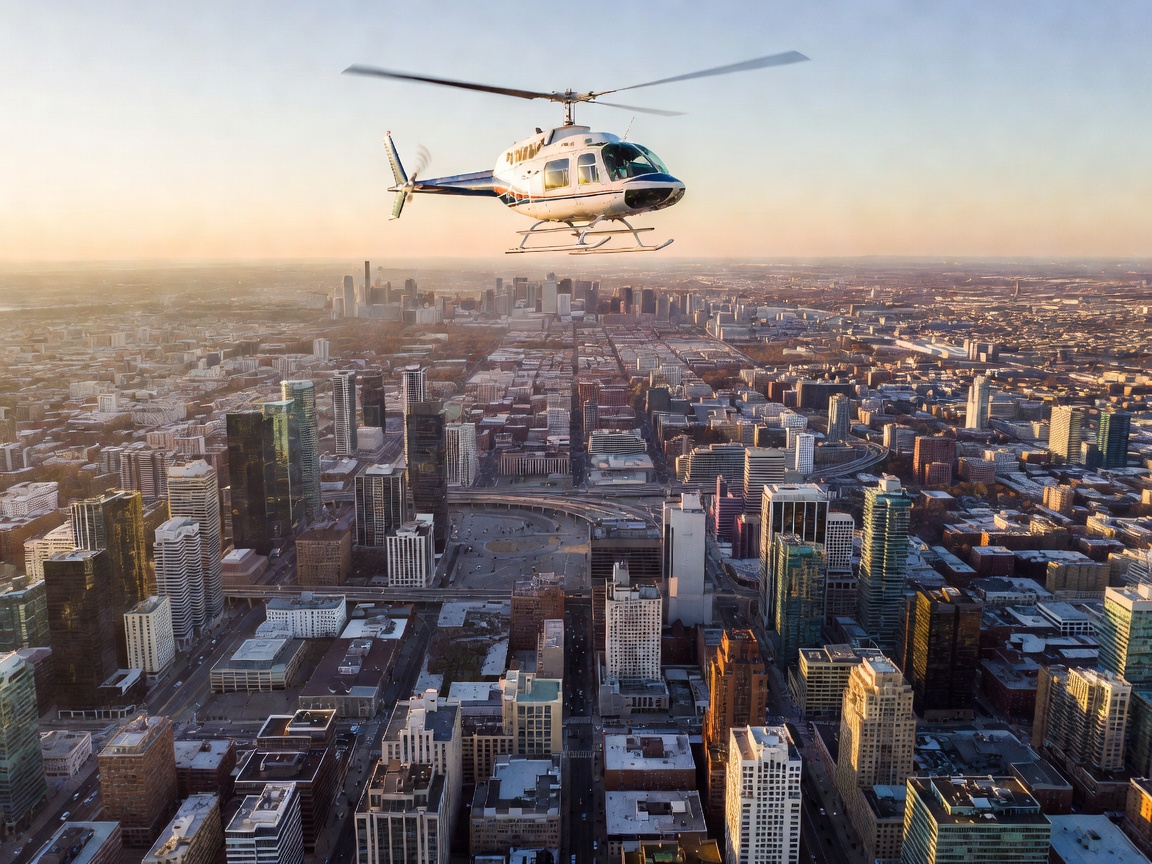
Unlike their military counterparts, which are built primarily for combat survivability and tactical deployment, civil and commercial helicopters are engineered for economic efficiency, passenger comfort, and precise utility. The civilian rotary-wing market spans a vast spectrum of operations, heavily relying on the vertical takeoff and landing (VTOL) capability to access locations unreachable by fixed-wing aircraft.
Executive and VIP Transport
Corporate helicopters are designed to facilitate rapid point-to-point transit in congested urban environments or between regional hubs. These machines often emphasize cabin noise reduction, vibration dampening technologies, and high-end avionics for all-weather instrument flight rules (IFR) capability.
- Twin-Engine Redundancy: Most modern VIP transport helicopters employ a twin-engine configuration to meet strict safety regulations for flying over densely populated areas.
- Interior Acoustics: Advanced composite paneling and specialized transmission mounts drastically reduce cabin noise.
- Autopilot Integration: Sophisticated 4-axis autopilots assist pilots during complex approaches to challenging rooftop or elevated helipads.
Aerial Crane and Heavy Lift Operations
Heavy-lift helicopters serve essentially as flying cranes. Their core design principle strips away internal passenger comforts to maximize payload capacity. Used extensively in infrastructure construction, logging, and disaster relief, these helicopters can hoist several tons of material on an external sling.
The operational framework for an aerial crane pilot involves extreme precision. Many of these aircraft feature aft-facing pilot stations or specialized bubble windows that allow the pilot to look directly down at the load and the hook, maintaining visual reference with ground crews.
Air Medical Transport (HEMS)
Helicopter Emergency Medical Services (HEMS) represent a critical pillar of civil aviation. The objective is minimizing transit time during the "golden hour" of trauma care. HEMS helicopters function as airborne intensive care units.
Because they frequently operate in austere environments—landing on highways, fields, or unlit rural areas—these aircraft are often equipped with Wire Strike Protection Systems (WSPS), Night Vision Imaging Systems (NVIS) for the crew, and terrain awareness warning systems. Space inside the cabin is meticulously managed to allow flight nurses and paramedics full access to the patient's upper body and airway.
Airborne Law Enforcement
Police aviation units utilize light and medium helicopters for patrol, pursuit coordination, and tactical team insertion. A standard police helicopter is fitted with specialized mission equipment that dramatically sets it apart from a standard civilian model.
Key mission equipment includes Forward Looking Infrared (FLIR) cameras capable of detecting body heat from miles away, powerful multi-million candlepower searchlights, and encrypted multi-band communication suites that allow the crew to talk directly to ground units across different jurisdictions. The agility of light helicopters allows them to orbit a specific location tightly, keeping a constant eye on suspects or developing situations on the ground.